How can the train operators possibly justify yet another increase to rail passenger fares? It has become a grimly reliable annual ritual: every January the cost of travelling by train rises, imposing a significant extra burden on those who have no option but to use the rail network to get to work or otherwise. This year’s rise, an average of 2.7 percent, may be a fraction lower than last year’s, but it is still well above the official Consumer Price Index (CPI) measure of inflation.
Successive governments have permitted such increases on the grounds that the cost of investing in and running the rail network should be borne by those who use it, rather than the general taxpayer. Why, the argument goes, should a car-driving pensioner from Lincolnshire have to subsidize the daily commute of a stockbroker from Surrey? Equally, there is a sense that the travails of commuters in the South East, many of whom will face among the biggest rises, have received too much attention compared to those who must endure the relatively poor infrastructure of the Midlands and the North.
However, over the past 12 months, those commuters have also experienced some of the worst rail strikes in years. It is all very well train operators trumpeting the improvements they are making to the network, but passengers should be able to expect a basic level of service for the substantial sums they are now paying to travel. The responsibility for the latest wave of strikes rests on the unions. However, there is a strong case that those who have been worst affected by industrial action should receive compensation for the disruption they have suffered.
The Government has pledged to change the law to introduce a minimum service requirement so that, even when strikes occur, services can continue to operate. This should form part of a wider package of measures to address the long-running problems on Britain’s railways. Yes, more investment is needed, but passengers will not be willing to pay more indefinitely if they must also endure cramped, unreliable services, interrupted by regular chaos when timetables are changed, or planned maintenance is managed incompetently. The threat of nationalization may have been seen off for now, but it will return with a vengeance if the justified anger of passengers is not addressed in short order.
1. The author holds that this year’s increase in rail passenger fares ________.
2. The stockbroker in Paragraph 2 is used to stand for ________.
3. It is indicated in Paragraph 3 that train operators ________.
4. If unable to calm down passengers, the railways may have to face ________.
5. Which of the following would be the best title for the text?
问题1选项
A.will ease train operation’s burden
B.has kept pace with inflation
C.is a big surprise to commuters
D.remains an unreasonable measure
问题2选项
A.car drivers
B.rail travelers
C.local investors
D.ordinary tax payers
问题3选项
A.are offering compensations to commuters
B.are trying to repair relations with the unions
C.have failed to provide an adequate service
D.have suffered huge losses owing to the strikes
问题4选项
A.the loss of investment
B.the collapse of operations
C.a reduction of revenue
D.a change of ownership
问题5选项
A.Who Are to Blame for the Strikes?
B.Constant Complaining Doesn’t Work
C.Can Nationalization Bring Hope?
D.Ever-rising Fares Aren’t Sustainable
第1题:D
第2题:B
第3题:C
第4题:D
第5题:D
第1题:
【整体分析】
来源:The Telegraph(《每日电讯报》)于2020年1月6日刊登的文章Passengers Won’t Put Up With Ever-Rising Rail Fares Forever(乘客不会永远忍受不断上涨的铁路票价)。
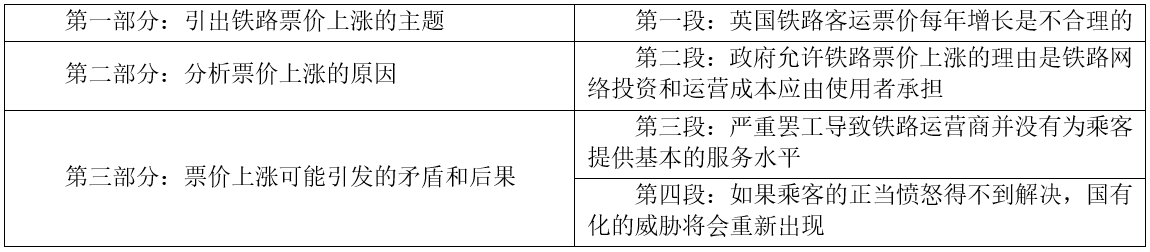
主题:本文主要讨论了英国铁路客运票价每年的增长以及其理由。文章认为,虽然涨价背后的理由是那些使用铁路网络的人应该承担投资和运营的成本,但最近的票价上涨是没有道理的,因为与通勤者得到的服务水平不匹配。文章建议,政府应该引入最低服务要求,并对受罢工影响的人进行补偿,同时解决铁路系统长期存在的问题,以解决乘客的愤怒,避免国有化的威胁。
结构:
【选项释义】
The author holds that this year’s increase in rail passengers fares ________. 作者认为,今年铁路客运票价的提高________。
A. will ease train operation’s burden A. 将减轻火车运营的负担
B. has kept pace with inflation B. 与通货膨胀保持了同步
C. is a big surprise to commuters C. 对通勤者来说是一个很大的意外
D. remains an unreasonable measure D. 仍然是一个不合理的措施
【考查点】推理判断题。
【解题思路】根据题干关键词this year’s increase可以定位到文章第一段,本段第二句说到“这已经成为一种可怕而固定不变的(grimly reliable)年度惯例:每年1月,乘火车出行的费用都会上涨,对那些别无选择,只能使用铁路网络上下班的人造成了巨大的额外负担(a significant extra burden)”,说明铁路客运票价提高会给通勤者造成额外的负担,是不合理的措施。因此D选项“仍然是一个不合理的措施”正确。
【干扰项排除】
A选项“将减轻火车运营的负担”在文中没有提及,属于无中生有;
B选项“与通货膨胀保持了同步”,由it is still well above the official Consumer Price Index (CPI) measure of inflation(仍远高于官方衡量通货膨胀的消费者价格指数)可知,铁路票价上涨没有与通货膨胀保持同步,属于反向干扰;
C选项“对通勤者来说是一个很大的意外”,由It has become a grimly reliable annual ritual(这已经成为一种可怕而固定不变的年度惯例)可知,铁路票价上涨已经成为惯例,所以通勤者不会感到意外,属于反向干扰。
第2题:
【选项释义】
The stockbroker in Paragraph 2 is used to stand for ________. 第二段中的股票经纪人是用来代表________。
A. car drivers A. 汽车司机
B. rail travelers B. 铁路乘客
C. local investors C. 当地投资者
D. ordinary tax payers D. 一般的纳税人
【考查点】词汇推断题。
【解题思路】根据题干关键词stockbroker可以定位到文章第二段第二句“他们的观点是,为什么一个来自林肯郡的开车出行的养老金领取者(a car-driving pensioner)必须补贴一个来自萨里郡的股票经纪人的日常通勤(the daily commute of a stockbroker)呢?”,该例子是为了论证本段第一句的观点“历届政府都允许这样的增长,理由是投资和运营铁路网络的成本应该由使用者承担(should be borne by those who use it),而不是全体纳税人(rather than the general taxpayer)”,说明此处stockbroker(股票经纪人)代表的是铁路网络的使用者。因此B选项“铁路乘客”正确。
【干扰项排除】
A选项“汽车司机”,由Why should a car-driving pensioner from Lincolnshire have to subsidize the daily commute of a stockbroker from Surrey?(为什么一个来自林肯郡的开车出行的养老金领取者必须补贴一个来自萨里郡的股票经纪人的日常通勤呢?)可知,汽车司机不应该补贴股票经纪人,所以两者应该是不同的群体,属于张冠李戴;
C选项“当地投资者”在文中没有提及,属于无中生有;
D选项“一般的纳税人”,由the cost of investing in and running the rail network should be borne by those who use it, rather than the general taxpayer(投资和运营铁路网络的成本应该由使用者承担,而不是全体纳税人)可知,股票经纪人代表的是铁路通勤者,而不是一般的纳税人,属于张冠李戴。
第3题:
【选项释义】
It is indicated in Paragraph 3 that train operators ________. 从第三段可以推断出,铁路运营商________。
A. are offering compensations to commuters A. 正在向通勤者提供补偿
B. are trying to repair relations with the unions B. 正在努力修复与工会的关系
C. have failed to provide an adequate service C. 没能提供足够的服务
D. have suffered huge losses owing to the strikes D. 由于罢工而遭受巨大损失
【考查点】推理判断题。
【解题思路】根据题干关键词train operators可以定位文章第三段第二句“铁路运营商(train operators)大肆宣扬他们正在对铁路网络进行改进,他们尽可以这样说,但乘客也应该可以期待他们现在支付的高额交通费用能够获得的基本服务水平(passengers should be able to expect a basic level of service)”,说明虽然铁路运营商正在进行改进,但还没能提供基本水平的服务。因此C选项“没能提供足够的服务”正确。
【干扰项排除】
A选项“正在向通勤者提供补偿”,由there is a strong case that those who have been worst affected by industrial action should receive compensation for the disruption they have suffered(有充分的理由表明,那些受罢工影响最严重的人应该为他们所遭受的不便获得赔偿)可知,文章只是说通勤者有理由获得补偿,但不代表铁路运营商真的向他们提供了补偿,属于过度推断;
B选项“正在努力修复与工会的关系”在文中没有提及,属于无中生有;
D选项“由于罢工而遭受巨大损失”,由those who have been worst affected by industrial action should receive compensation for the disruption they have suffered(那些受罢工影响最严重的人应该为他们所遭受的不便获得赔偿)可知,因罢工而遭受损失的是通勤者,而不是铁路运营商,属于张冠李戴。
第4题:
【选项释义】
If unable to calm down passengers, the railways may have to face ________. 如果不能安抚乘客,铁路部门可能不得不面临________。
A. the loss of investment A. 投资的损失
B. the collapse of operations B. 运营的崩溃
C. a reduction of revenue C. 收入的减少
D. a change of ownership D. 所有权的改变
【考查点】事实细节题。
【解题思路】根据题干关键词unable to calm down passengers可以定位到文章第四段最后一句“国有化的威胁(The threat of nationalization)可能暂时被消除了,但如果乘客正当的愤怒不能在短期内得到解决(the justified anger of passengers is not addressed in short order),这种威胁将卷土重来(return with a vengeance)”,说明如果不能安抚乘客,铁路部门将会变成国有化。因此D选项“所有权的改变”正确。
【干扰项排除】
A选项“投资的损失”,B选项“运营的崩溃”和C选项“收入的减少”在文中均没有提及,属于无中生有。
第5题:
【选项释义】
Which of the following would be the best title for the text? 以下哪项是这篇文章的最佳标题?
A. Who Are to Blame for the Strikes? A. 谁是罢工的罪魁祸首?
B. Constant Complaining Doesn’t Work B. 不断地抱怨并不奏效
C. Can Nationalization Bring Hope? C. 国有化能带来希望吗?
D. Ever-rising Fares Aren’t Sustainable D. 不断上涨的票价是不可持续的
【考查点】主旨大意题。
【解题思路】文章首先提出英国铁路票价上涨这一主题,接着分析了政府允许涨价的原因,最后介绍了票价持续上涨会带来的威胁,可能导致铁路部门的国有化,由此可知本文主要是围绕铁路票价上涨展开论述的,并且作者对此持反对的态度,票价上涨不可持续,必须在短期内得到解决。因此D选项“不断上涨的票价是不可持续的”正确。
【干扰项排除】
A选项“谁是罢工的罪魁祸首?”和C选项“国有化能带来希望吗?”只在文中的某个部分有提及,不能概括全文的主旨大意,属于以偏概全;
B选项“不断地抱怨并不奏效”在文中没有提及,属于无中生有。
【重点词汇】
grimly /ˈɡrɪmli/ adv. 可怕地;冷酷地
ritual /ˈrɪtʃuəl/ n. 习惯;老规矩
fraction /ˈfrækʃn/ n. 小部分;少量
inflation /ɪnˈfleɪʃn/ n. 通货膨胀
successive /səkˈsesɪv/ adj. 连续的;接连的;相继的
pensioner /ˈpenʃənə(r)/ n. 领养老金(或退休金、抚恤金)者
subsidize /ˈsʌbsɪdaɪz/ v. 资助;补助
stockbroker /ˈstɒkbrəʊkə(r)/ n. 证券(或股票)经纪人
infrastructure /ˈɪnfrəstrʌktʃə(r)/ n. 基础设施,基础建设
strike /straɪk/ n. 罢工
trumpet /ˈtrʌmpɪt/ v. 宣扬;鼓吹;吹嘘
substantial /səbˈstænʃl/ adj. 大量的;价值巨大的;重大的
pledge /pledʒ/ v. 保证给予(或做);正式承诺
cramped /kræmpt/ adj. 狭窄的;狭小的
incompetently /ɪnˈkɒmpɪtəntli/ adv. 无能力地;不胜任地
nationalization /ˌnæʃnəlaɪˈzeɪʃn/ n. 国有化
vengeance /ˈvendʒəns/ n. 报复;报仇;复仇
on the grounds that 基于……理由
be borne by 由……负担
rest on 依靠;依赖
a package of 一系列;一揽子
in short order 在短期内;立即
【长难句分析】
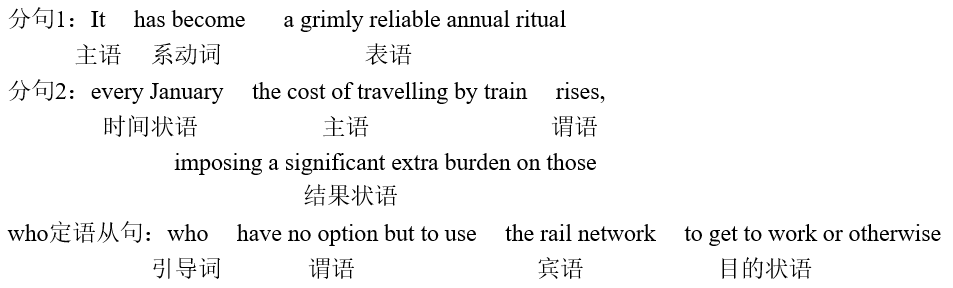
1. It has become a grimly reliable annual ritual: every January the cost of travelling by train rises, imposing a significant extra burden on those who have no option but to use the rail network to get to work or otherwise.
【结构分析】
【补充分析】
① imposing a significant extra burden on those是动词的现在分词作状语,表示铁路费用上涨的结果;
② who引导定语从句修饰those,表示别无选择只能使用铁路网络上下班的那些人。
【参考译文】这已经成为一种可怕而固定不变的年度惯例:每年1月,乘火车出行的费用都会上涨,对那些别无选择,只能使用铁路网络上下班的人造成了巨大的额外负担。
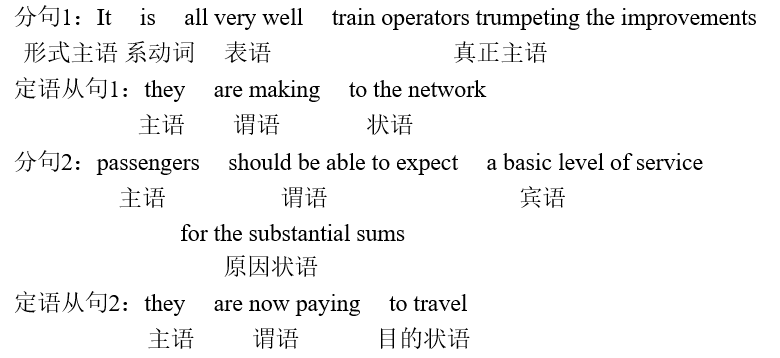
2. It is all very well train operators trumpeting the improvements they are making to the network, but passengers should be able to expect a basic level of service for the substantial sums they are now paying to travel.
【结构分析】
【补充分析】
① It是形式主语,真正的主语是train operators trumpeting the improvements,表示铁路运营商尽可以大肆宣扬他们的改进;
② for the substantial sums是原因状语,表示乘客可以期待能够获得基本服务水平的原因是支付了高额费用。
【参考译文】铁路运营商大肆宣扬他们正在对铁路网络进行改进,他们尽可以这样说,但乘客也应该可以期待他们现在支付的高额交通费用能够获得的基本服务水平。
【全文翻译】
铁路运营商怎么能证明再一次提高铁路客运票价是正当的呢?这已经成为一种可怕而固定不变的年度惯例:每年1月,乘火车出行的费用都会上涨,对那些别无选择,只能使用铁路网络上下班的人造成了巨大的额外负担。今年的平均涨幅为2.7%,可能略低于去年,但仍远高于官方衡量通货膨胀的消费者价格指数。
历届政府都允许这样的增长,理由是投资和运营铁路网络的成本应该由使用者承担,而不是全体纳税人。他们的观点是,为什么一个来自林肯郡的开车出行的养老金领取者必须补贴一个来自萨里郡的股票经纪人的日常通勤呢?同样,有一种看法是,与那些必须忍受中部和北部相对较差的基础设施的人相比,东南部通勤者的痛苦受到了太多的关注,其中许多人将面临最大的涨幅。
然而,在过去的12个月里,这些通勤者也经历了几年来最严重的铁路罢工。铁路运营商大肆宣扬他们正在对铁路网络进行改进,他们尽可以这样说,但乘客也应该可以期待他们现在支付的高额交通费用能够获得的基本服务水平。最近一波罢工浪潮的责任在于工会。然而,有充分的理由表明,那些受罢工影响最严重的人应该为他们所遭受的不便获得赔偿。
政府承诺修改法律,引入最低服务要求,以便即使发生罢工,服务也能继续运营。这应该成为更广泛的一揽子措施的一部分,以解决英国铁路长期存在的问题。诚然,需要更多的投资,但如果乘客还必须忍受拥挤、不准点、因时刻表变动或维修计划执行不力的混乱情形而中断的服务,他们就不会愿意无限期地支付更多的费用。国有化的威胁可能暂时被消除了,但如果乘客正当的愤怒不能在短期内得到解决,这种威胁将卷土重来。