Among the annoying challenges facing the middle class is one that will probably go unmentioned in the next presidential campaign: What happens when the robots come for their jobs?
Don’t dismiss that possibility entirely. About half of U.S. jobs are at high risk of being automated, according to a University of Oxford study, with the middle class disproportionately squeezed. Lower-income jobs like gardening or day care don’t appeal to robots. But many middle-class occupations—trucking, financial advice, software engineering—have aroused their interest, or soon will. The rich own the robots, so they will be fine.
This isn’t to be alarmist. Optimists point out that technological upheaval has benefited workers in the past. The Industrial Revolution didn’t go so well for Luddites whose jobs were displaced by mechanized looms, but it eventually raised living standards and created more jobs than it destroyed. Likewise, automation should eventually boost productivity, stimulate demand by driving down prices, and free workers from hard, boring work. But in the medium term, middle-class workers may need a lot of help adjusting.
The first step, as Erik Brynjolfsson and Andrew McAfee argue in The Second Machine Age, should be rethinking education and job training. Curriculums from grammar school to college should evolve to focus less on memorizing facts and more on creativity and complex communication. Vocational schools should do a better job of fostering problem-solving skills and helping students work alongside robots. Online education can supplement the traditional kind. It could make extra training and instruction affordable. Professionals trying to acquire new skills will be able to do so without going into debt.
The challenge of coping with automation underlines the need for the U.S. to revive its fading business dynamism: Starting new companies must be made easier. In previous eras of drastic technological change, entrepreneurs smoothed the transition by dreaming up ways to combine labor and machines. The best uses of 3D printers and virtual reality haven’t been invented yet. The U.S. needs the new companies that will invent them.
Finally, because automation threatens to widen the gap between capital income and labor income, taxes and the safety net will have to be rethought. Taxes on low-wage labor need to be cut, and wage subsidies such as the earned income tax credit should be expanded: This would boost incomes, encourage work, reward companies for job creation, and reduce inequality.
Technology will improve society in ways big and small over the next few years, yet this will be little comfort to those who find their lives and careers upended by automation. Destroying the machines that are coming for our jobs would be nuts. But policies to help workers adapt will be indispensable.
1. Who will be most threatened by automation?
2. Which of the following best represents the author’s view?
3. Education in the age of automation should put more emphasis on ________.
4. The author suggests that tax policies be aimed at ________.
5. In this text, the author presents a problem with ________.
问题1选项
A.Leading politicians.
B.Low-wage laborers.
C.Robot owners.
D.Middle-class workers.
问题2选项
A.Worries about automation are in fact groundless.
B.Optimists’ opinions on new tech find little support.
C.Issues arising from automation need to be tackled.
D.Negative consequences of new tech can be avoided.
问题3选项
A.creative potential
B.job-hunting skills
C.individual needs
D.cooperative spirit
问题4选项
A.encouraging the development of automation
B.increasing the return on capital investment
C.easing the hostility between rich and poor
D.preventing the income gap from widening
问题5选项
A.opposing views on it
B.possible solutions to it
C.its alarming impacts
D.its major variations
第1题:D
第2题:C
第3题:A
第4题:D
第5题:B
第1题:
【整体分析】
来源:Bloomberg Businessweek《彭博商业周刊》于2015年5月12日刊登的文章Robots Versus the Middle Class(机器人大战中产阶级)。
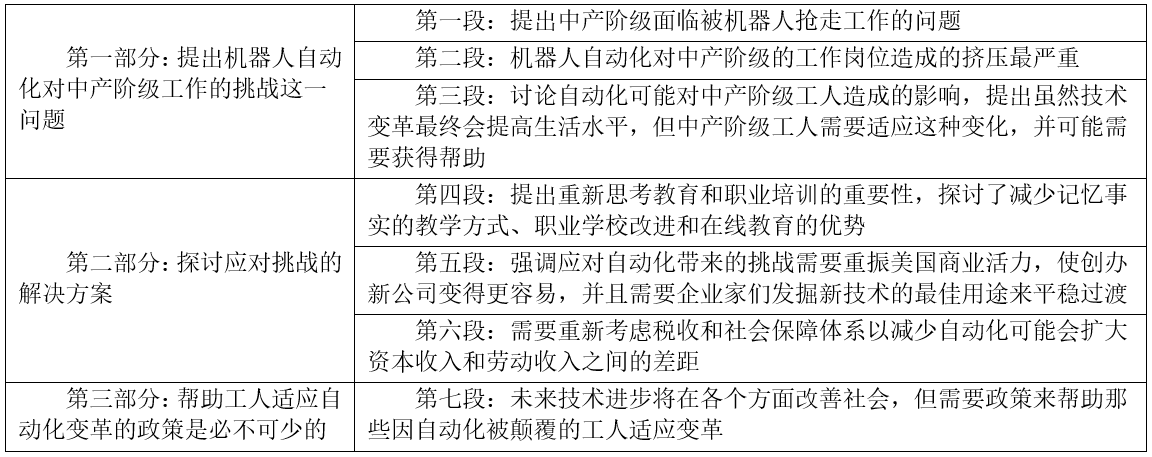
主题:本文主要讨论了机器人自动化对中产阶级工作的挑战,并探讨如何应对这种变化。文章指出需要重新思考教育和职业培训,创办新公司以创造新就业机会,并重新考虑税收和社会保障体系以减少不平等。最后,文章呼吁政策制定者采取措施帮助工人适应自动化带来的变革。
结构:
【选项释义】
Who will be most threatened by automation? 谁会受到自动化的最大威胁?
A. Leading politicians. A. 政治领袖。
B. Low-wage laborers. B. 低工资的劳动者。
C. Robot owners. C. 机器人所有者。
D. Middle-class workers. D. 中产阶级工人。
【考查点】事实细节题。
【解题思路】根据题干关键词most threatened by automation可以定位到文章第二段倒数第二句“牛津大学的一项研究显示,美国约有一半的工作岗位面临被自动化的高风险(at high risk of being automated),中产阶级的工作岗位受到了不成比例的挤压(with the middle class disproportionately squeezed)”,说明中产阶级的工作岗位受到自动化的挤压最为严重,所以受到自动化最大威胁的是中产阶级。因此D选项“中产阶级工人。”正确。
【干扰项排除】
A选项“政治领袖。”在文中没有提及,属于无中生有;
B选项“低工资的劳动者。”,由Lower-income jobs like gardening or day care don’t appeal to robots.(像园艺或日托这样的低收入工作对机器人没有吸引力。)可知,自动化不会取代低工资劳动者的工作,属于反向干扰;
C选项“机器人所有者。”,由The rich own the robots, so they will be fine.(富人是机器人的主人,所以他们不必担忧。)可知,自动化不会威胁到机器人所有者,属于反向干扰。
第2题:
【选项释义】
Which of the following best represents the author’s view? 以下哪项最能代表作者的观点?
A. Worries about automation are in fact groundless. A. 对自动化的担心实际上是毫无根据的。
B. Optimists’ opinions on new tech find little support. B. 乐观主义者对新技术的看法几乎得不到支持。
C. Issues arising from automation need to be tackled. C. 自动化带来的问题需要被解决。
D. Negative consequences of new tech can be avoided. D. 新技术的负面效应是可以避免的。
【考查点】推理判断题。
【解题思路】根据题干关键词the author’s view可以定位到文章第三段第一句“这并不是危言耸听(This isn’t to be alarmist)”和最后一句“但从中期来看,中产阶级工人可能需要很多帮助来适应这种变化(middle-class workers may need a lot of help adjusting)”,说明作者认为自动化确实会带来威胁,需要采取措施解决中产阶级工人面临的问题。因此C选项“自动化带来的问题需要被解决。”正确。
【干扰项排除】
A选项“对自动化的担心实际上是毫无根据的。”,由Don’t dismiss that possibility entirely. About half of U.S. jobs are at high risk of being automated, according to a University of Oxford study, with the middle class disproportionately squeezed.(不要完全排除这种可能性。牛津大学的一项研究显示,美国约有一半的工作岗位面临被自动化的高风险,中产阶级的工作岗位受到了不成比例的挤压。)可知,对自动化的担心是有研究支持的,属于反向干扰;
B选项“乐观主义者对新技术的看法几乎得不到支持。”,由Optimists point out that technological upheaval has benefited workers in the past. The Industrial Revolution didn’t go so well for Luddites whose jobs were displaced by mechanized looms, but it eventually raised living standards and created more jobs than it destroyed.(乐观主义者指出,技术变革在过去使工人受益。工业革命对卢德分子来说并不顺利,他们的工作被机械化织布机取代了,但工业革命最终提高了生活水平,创造出的工作岗位比毁掉的更多。)可知,作者举了工业革命的例子来支持乐观主义者的观点,属于反向干扰;
D选项“新技术的负面效应是可以避免的。”在文中没有提及,属于无中生有。
第3题:
【选项释义】
Education in the age of automation should put more emphasis on ________. 自动化时代的教育应该更加强调________。
A. creative potential A. 创新潜力
B. job-hunting skills B. 找工作的技能
C. individual needs C. 个人需求
D. cooperative spirit D. 合作精神
【考查点】事实细节题。
【解题思路】根据题干关键词Education可以定位到文章第四段第二句“从小学到大学的课程应该逐渐改变,减少对记忆事实的关注,更多地关注创造力和复杂沟通能力(more on creativity and complex communication)”,说明自动化时代的教育应该更加强调创造力和复杂沟通能力。因此A选项“创新潜力”正确。
【干扰项排除】
B选项“找工作的技能”,C选项“个人需求”和D选项“合作精神”在文中均没有提及,属于无中生有。
第4题:
【选项释义】
The author suggests that tax policies be aimed at ________. 作者建议,税收政策的目的是________。
A. encouraging the development of automation A. 鼓励自动化的发展
B. increasing the return on capital investment B. 增加资本投资的回报
C. easing the hostility between rich and poor C. 缓和贫富之间的敌对情绪
D. preventing the income gap from widening D. 防止收入差距的扩大
【考查点】推理判断题。
【解题思路】根据题干关键词tax policies可以定位到文章第六段第一句“最后,由于自动化可能会扩大资本收入和劳动收入之间的差距(because automation threatens to widen the gap between capital income and labor income),我们必须重新考虑税收和社会保障体系”,说明税收政策需要改革的原因是收入差距的扩大,所以税收政策的目的需要防止收入差距扩大。因此D选项“防止收入差距的扩大”正确。
【干扰项排除】
A选项“鼓励自动化的发展”,由This would boost incomes, encourage work(这将增加收入,鼓励就业)可知,税收政策鼓励的是就业,而不是自动化发展,属于偷换概念;
B选项“增加资本投资的回报”和C选项“缓和贫富之间的敌对情绪”在文中没有提及,属于无中生有。
第5题:
【选项释义】
In this text, the author presents a problem with ________. 在这篇文章中,作者以________提出了一个问题。
A. opposing views on it A. 对它的反对意见
B. possible solutions to it B. 可能的解决办法
C. its alarming impacts C. 其令人担心的影响
D. its major variations D. 它的主要变化
【考查点】主旨大意题。
【解题思路】文章首先提出了机器人自动化对中产阶级工作的挑战这一问题,接着探讨如何应对这种变化,指出了需要重新思考教育和职业培训,创办新公司以创造新就业机会,并重新考虑税收和社会保障体系等策略,最后呼吁政策制定者采取措施帮助工人适应自动化带来的变革,由此可知作者主要是在讨论解决问题的方法。因此B选项“可能的解决办法”正确。
【干扰项排除】
A选项“对它的反对意见”和D选项“它的主要变化”在文中无法体现,属于无中生有;
C选项“其令人担心的影响”只在文章某部分出现,不能概括全文的主旨大意,属于以偏概全。
【重点词汇】
dismiss /dɪsˈmɪs/ v. 不予理会
disproportionately /ˌdɪsprəˈpɔːʃənətli/ adv. 不成比例地
alarmist /əˈlɑːmɪst/ adj. 危言耸听的;骇人的
upheaval /ʌpˈhiːvl/ n. 剧变;激变;动乱;动荡
loom /luːm/ n. 织布机
supplement /sʌplɪˈment/ v. 增补;补充
revive /rɪˈvaɪv/ v. 苏醒;复活
dynamism /ˈdaɪnəmɪzəm/ n. 精力;活力;劲头
subsidy /ˈsʌbsədi/ n. 补贴;补助金;津贴
upend /ʌpˈend/ v. 翻倒;倒放;使颠倒
indispensable /ˌɪndɪˈspensəbl/ adj. 不可或缺的;必不可少的
at high risk of 面临……的高风险
go into debt 欠债
【长难句分析】
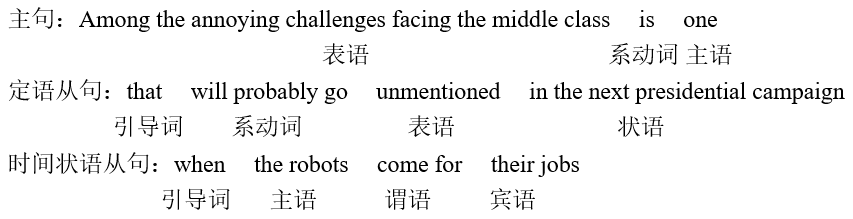
1. Among the annoying challenges facing the middle class is one that will probably go unmentioned in the next presidential campaign: What happens when the robots come for their jobs?
【结构分析】
【补充分析】
① 主句是倒装结构,还原语序是:One is among the annoying challenges,用于强调在中产阶级面临的许多挑战中,有一个特别重要的挑战;
② facing the middle class是现在分词作后置定语修饰challenges,具体指中产阶级目前正在面临的挑战;
③ that引导定语从句修饰one,也就是前面所提到的中产阶级面临的其中一项挑战,描述这个挑战将很可能在下一届总统竞选中被忽视;
④ What happens when the robots come for their jobs?整个句子作one的同位语,进一步解释了one所指代的具体挑战是什么,即机器人将来可能会取代中产阶级的工作。
【参考译文】在中产阶级面临的令人恼火的挑战中,有一个在下一届总统竞选中可能不会被提及:当机器人来抢他们的工作时会发生什么?
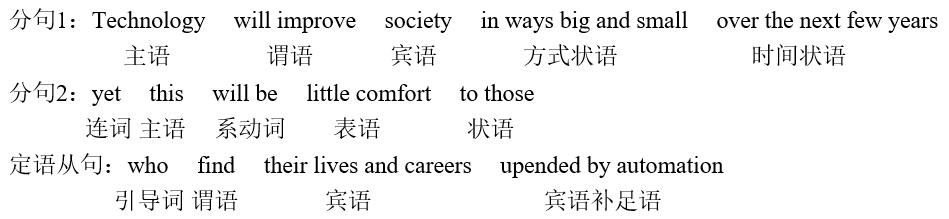
2. Technology will improve society in ways big and small over the next few years, yet this will be little comfort to those who find their lives and careers upended by automation.
【结构分析】
【补充分析】
① who引导定语从句修饰those,进一步解释了先行词those的身份和处境,即那些发现自己的生活和事业被自动化颠覆的人;
② upended by automation作their lives and careers的宾语补足语,进一步说明了自动化对于个人职业和生活的影响和不确定性。
【参考译文】在未来几年里,技术将在大大小小的方面改善社会,但对于那些发现自己的生活和事业被自动化颠覆的人来说,这并不是什么安慰。
【全文翻译】
在中产阶级面临的令人恼火的挑战中,有一个在下一届总统竞选中可能不会被提及:当机器人来抢他们的工作时会发生什么?
不要完全排除这种可能性。牛津大学的一项研究显示,美国约有一半的工作岗位面临被自动化的高风险,中产阶级的工作岗位受到了不成比例的挤压。像园艺或日托这样的低收入工作对机器人没有吸引力。但是许多中产阶级的职业——卡车运输、金融咨询、软件工程——已经引起了机器人的兴趣,或者很快就会引起他们的兴趣。富人是机器人的主人,所以他们不必担忧。
这并不是危言耸听。乐观主义者指出,技术变革在过去使工人受益。工业革命对卢德分子来说并不顺利,他们的工作被机械化织布机取代了,但工业革命最终提高了生活水平,创造出的工作岗位比毁掉的更多。同样,自动化最终也应该会提高生产率,通过降低物价来刺激需求,并将工人从艰苦乏味的工作中解放出来。但从中期来看,中产阶级工人可能需要很多帮助来适应这种变化。
正如埃里克•布林约尔松和安德鲁•迈克菲在《第二次机器时代》一书中所主张的那样,第一步应该重新思考教育和职业培训。从小学到大学的课程应该逐渐改变,减少对记忆事实的关注,更多地关注创造力和复杂沟通能力。职业学校应该更好地培养学生解决问题的技能,帮助学生与机器人一起工作。在线教育可以作为传统教育的补充。它可以使人们支付得起额外的培训及辅导费用。这样想要获取新技能的专业人士可以不用负债就能如愿。
应对自动化带来的挑战凸显了美国重振其日渐衰退的商业活力的必要性:必须让创办新公司变得更容易。在之前剧烈的技术变革时代,企业家们通过想出将劳动力和机器结合起来的方法来平稳过渡。3D打印机和虚拟现实技术的最佳用途还没有被发明出来。美国需要能将它们创造出来的新公司。
最后,由于自动化可能会扩大资本收入和劳动收入之间的差距,我们必须重新考虑税收和社会保障体系。对低薪劳动力的税收需要削减,如劳动所得税抵免的工资补贴应该扩大:这将增加收入,鼓励就业,奖励公司创造就业机会,并减少不平等。
在未来几年里,技术将在大大小小的方面改善社会,但对于那些发现自己的生活和事业被自动化颠覆的人来说,这并不是什么安慰。摧毁即将取代我们工作的机器是愚蠢的,但帮助工人适应这种变革的政策是必不可少的。