Any fair-minded assessment of the dangers of the deal between Britain’s National Health Service (NHS) and DeepMind must start by acknowledging that both sides mean well. DeepMind is one of the leading artificial intelligence (AI) companies in the world. The potential of this work applied to healthcare is very great, but it could also lead to further concentration of power in the tech giants. It is against that background that the information commissioner, Elizabeth Denham, has issued her damning verdict against the Royal Free hospital trust under the NHS, which handed over to DeepMind the records of 1.6 million patients in 2015 on the basis of a vague agreement which took far too little account of the patients’ rights and their expectations of privacy.
DeepMind has almost apologized. The NHS trust has mended its ways. Further arrangements—and there may be many—between the NHS and DeepMind will be carefully scrutinized to ensure that all necessary permissions have been asked of patients and all unnecessary data has been cleaned. There are lessons about informed patient consent to learn. But privacy is not the only angle in this case and not even the most important. Ms. Denham chose to concentrate the blame on the NHS trust, since under existing law it “controlled” the data and DeepMind merely “processed” it. But this distinction misses the point that it is processing and aggregation, not the mere possession of bits, that gives the data value.
The great question is who should benefit from the analysis of all the data that our lives now generate. Privacy law builds on the concept of damage to an individual from identifiable knowledge about them. That misses the way the surveillance economy works. The data of an individual there gains its value only when it is compared with the data of countless millions more.
The use of privacy law to curb the tech giants in this instance feels slightly maladapted. This practice does not address the real worry. It is not enough to say that the algorithms DeepMind develops will benefit patients and save lives. What matters is that they will belong to a private monopoly which developed them using public resources. If software promises to save lives on the scale that drugs now can, big data may be expected to behave as big pharma has done. We are still at the beginning of this revolution and small choices now may turn out to have gigantic consequences later. A long struggle will be needed to avoid a future of digital feudalism. Ms. Denham’s report is a welcome start.
1. What is true of the agreement between the NHS and DeepMind?
2. The NHS trust responded to Denham’s verdict with ________.
3. The author argues in Paragraph 2 that ________.
4. According to the last paragraph, the real worry arising from this deal is ________.
5. The author’s attitude toward the application of AI to healthcare is ________.
问题1选项
A.It caused conflicts among tech giants.
B.It failed to pay due attention to patients’ rights.
C.It fell short of the latter’s expectations.
D.It put both sides into a dangerous situation.
问题2选项
A.empty promises
B.tough resistance
C.necessary adjustments
D.sincere apologies
问题3选项
A.privacy protection must be secured at all costs
B.leaking patients’ data is worse than selling it
C.making profits from patients’ data is illegal
D.the value of data comes from the processing of it
问题4选项
A.the vicious rivalry among big pharmas
B.the ineffective enforcement of privacy law
C.the uncontrolled use of new software
D.the monopoly of big data by tech giants
问题5选项
A.ambiguous
B.cautious
C.appreciative
D.contemptuous
第1题:B
第2题:C
第3题:D
第4题:D
第5题:B
第1题:
【整体分析】
来源:The Guardian《卫报》于2017年7月5日刊登的文章The Guardian view on patient data: we need a better approach(《卫报》对患者数据的看法:我们需要更好的方法)。
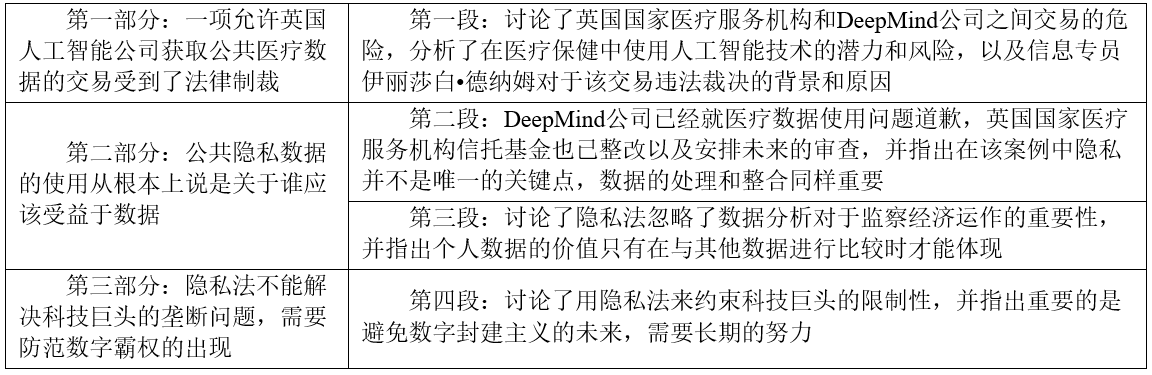
主题:本文主要探讨了英国国家医疗服务机构和DeepMind公司之间的数据交易,强调了数据隐私和科技巨头垄断的风险,并呼吁长期的努力来避免数字封建主义的未来。
结构:
【试题解析】
【选项释义】
What is true of the agreement between the NHS and DeepMind? 在NHS和DeepMind之间的协议中,哪一项是正确的?
A. It caused conflicts among tech giants. A. 它引起了科技巨头之间的冲突。
B. It failed to pay due attention to patients’ rights. B. 它没有对病人的权利给予应有的关注。
C. It fell short of the latter’s expectations. C. 它没有达到后者的期望。
D. It put both sides into a dangerous situation. D. 它使双方都陷入了危险的境地。
【考查点】事实细节题。
【解题思路】根据题干关键词the agreement between the NHS and DeepMind可以定位到文章第一段最后一句“2015年,该医院根据一项模糊的协议,将160万名患者的档案移交给了DeepMind公司,该协议几乎没有考虑患者的权利以及他们对于隐私权的期望(took far too little account of the patients’ rights and their expectations of privacy)”,说明该协议没有充分关注患者的隐私权。因此B选项“它没有对病人的权利给予应有的关注。”正确。
【干扰项排除】
A选项“它引起了科技巨头之间的冲突。”和D选项“它使双方都陷入了危险的境地。”在文中没有提及,属于无中生有;
C选项“它没有达到后者的期望。”,由took far too little account of the patients’ rights and their expectations of privacy(几乎没有考虑患者的权利以及他们对于隐私权的期望)可知,该协议没有达到的是患者的期望,而不是DeepMind公司的期望,属于偷换概念。
第2题:
【选项释义】
The NHS trust responded to Denham’s verdict with ________. NHS信托对德纳姆裁决的回应是:________。
A. empty promises A. 空洞的承诺
B. tough resistance B. 强硬的抵抗
C. necessary adjustments C. 必要的调整
D. sincere apologies D. 真诚的道歉
【考查点】事实细节题。
【解题思路】根据题干关键词The NHS trust responded可以定位到文章第二段第二句“英国国家医疗服务机构信托基金已经进行了整改(has mended its ways)”,说明NHS信托对裁决的回应是做出整改。因此C选项“必要的调整”正确。
【干扰项排除】
A选项“空洞的承诺”和B选项“强硬的抵抗”,由文章可知,NHS信托的态度是积极改正错误,而不是空头承诺或抵抗,属于反向干扰;
D选项“真诚的道歉”,由DeepMind has almost apologized.(DeepMind公司几乎已经道歉了。)可知,道歉的是DeepMind公司,而不是NHS信托,属于张冠李戴。
第3题:
【选项释义】
The author argues in Paragraph 2 that ________. 作者在第2段中提出________。
A. privacy protection must be secured at all costs A. 必须不惜一切代价确保隐私保护
B. leaking patients’ data is worse than selling it B. 泄露病人的数据比卖掉它更糟糕
C. making profits from patients’ data is illegal C. 从病人的数据中获利是非法的
D. the value of data comes from the processing of it D. 数据的价值来自于对它的处理
【考查点】事实细节题。
【解题思路】根据题干关键词Paragraph 2可以定位到文章第二段最后一句“但这种区别忽略了一点,即赋予数据价值的是处理和整合,而不是仅仅拥有信息(it is processing and aggregation, not the mere possession of bits, that gives the data value)”,说明作者认为数据的价值取决于处理和整合数据。因此D选项“数据的价值来自于对它的处理”正确。
【干扰项排除】
A选项“必须不惜一切代价确保隐私保护”,由But privacy is not the only angle in this case and not even the most important.(但在这个案例中,隐私并不是唯一的角度,甚至不是最重要的角度。)可知,作者认为隐私保护并不是最重要的,属于反向干扰;
B选项“泄露病人的数据比卖掉它更糟糕”和C选项“从病人的数据中获利是非法的”在文中没有提及,属于无中生有。
第4题:
【选项释义】
According to the last paragraph, the real worry arising from this deal is ________. 根据最后一段,这项交易引起的真正担忧是________。
A. the vicious rivalry among big pharmas A. 大药厂之间的恶性竞争
B. the ineffective enforcement of privacy law B. 隐私法的执行不力
C. the uncontrolled use of new software C. 新软件的使用不受控制
D. the monopoly of big data by tech giants D. 科技巨头对大数据的垄断
【考查点】事实细节题。
【解题思路】根据题干关键词the real worry可以定位到文章最后一段第四句“重要的是(What matters is),这些算法将属于一个利用公共资源将它们开发出来的私人垄断企业(belong to a private monopoly which developed them using public resources)”,说明真正的担忧在于企业会垄断公共数据。因此D选项“科技巨头对大数据的垄断”正确。
【干扰项排除】
A选项“大药厂之间的恶性竞争”和C选项“新软件的使用不受控制”在文中没有提及,属于无中生有;
B选项“隐私法的执行不力”是在文章第三段中提及,属于出处错位。
第5题:
【选项释义】
The author’s attitude toward the application of AI to healthcare is ________. 作者对人工智能在医疗领域的应用的态度是________。
A. ambiguous A. 模棱两可的
B. cautious B. 谨慎的
C. appreciative C. 欣赏的
D. contemptuous D. 蔑视的
【考查点】观点态度题。
【解题思路】根据题干关键词The author’s attitude可以定位到文章最后一段倒数第二、三句“我们仍处于这场革命的开端,现在任何小的选择都可能会在未来产生巨大的影响(small choices now may turn out to have gigantic consequences later)。要避免数字封建主义的未来,还需要长期的努力(A long struggle will be needed)”,说明作者对人工智能在医疗领域的应用的态度非常谨慎。因此B选项“谨慎的”正确。
【干扰项排除】
A选项“模棱两可的”,C选项“欣赏的”和D选项“蔑视的”在文中均无法体现,属于无中生有。
【重点词汇】
assessment /əˈsesmənt/ n. 评估;评价
concentration /ˌkɑːnsnˈtreɪʃən/ n. 集中;聚集
commissioner /kəˈmɪʃənər/ n. 委员;专员
damning /ˈdæmɪŋ/ adj. 谴责的;使人震惊的
verdict /ˈvɜːrdɪkt/ n. 裁决;判决
trust /trʌst/ n. 基金会;信托
vague /veɪɡ/ adj. 模糊的;不明确的
mend /mend/ v. 改善;修补
scrutinize /ˈskruːtɪnaɪz/ v. 仔细检查;审查
consent /kənˈsent/ n. 同意;允许
aggregation /ˌæɡrɪˈɡeɪʃən/ n. 聚合;集合
surveillance /səˈveɪləns/ n. 监视;监控
pharma /ˈfɑːrmə/ n. 制药公司
revolution /ˌrevəˈluːʃən/ n. 革命;变革
feudalism /ˈfjuːdəlɪzəm/ n. 封建制度
fair-minded 公正的;不偏不倚的
tech giant 科技巨头
【长难句分析】
1. The potential of this work applied to healthcare is very great, but it could also lead to further concentration of power in the tech giants.
【结构分析】

【补充分析】
① applied to healthcare是过去分词短语作后置定语,修饰先行词work,表示这项技术被应用到了医疗保健领域,强调了该技术在医疗保健领域中具有潜力;
② in the tech giants是介词短语作后置定语,修饰先行词power,表示集中权力的范围,强调科技公司可进一步集中权力。
【参考译文】这项技术应用于医疗保健的潜力非常大,但它也可能导致权力进一步向科技巨头集中。
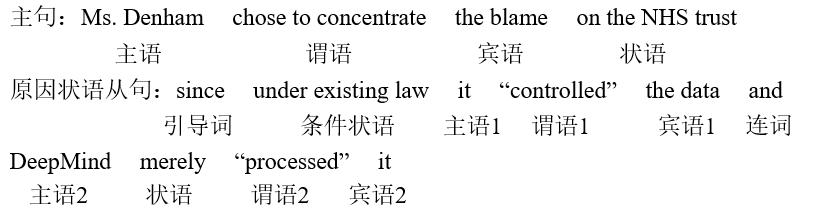
2. Ms. Denham chose to concentrate the blame on the NHS trust, since under existing law it “controlled” the data and DeepMind merely “processed” it.
【结构分析】
【补充分析】
① since引导原因状语从句,解释了德纳姆女士将责任集中在英国国家医疗服务机构信托基金身上的原因,说明英国国家医疗服务机构信托基金对数据进行控制,DeepMind仅对数据进行处理,这一点强调了责任的界定和分配;
② under existing law是介词短语作条件状语,指示了一个特定的条件,即根据现有的法律规定,导致了后面提到的结果。
【参考译文】德纳姆女士选择将责任集中在英国国家医疗服务机构信托基金上,因为根据现行法律,英国国家医疗服务机构“控制”了数据,而DeepMind公司只是“处理”了数据。
【全文翻译】
任何对英国国家医疗服务机构和DeepMind公司之间交易的危险进行公正评估的前提,都必须承认双方都是善意的。DeepMind公司是全球领先的人工智能公司之一。这项技术应用于医疗保健的潜力非常大,但它也可能导致权力进一步向科技巨头集中。正是在这样的背景下,信息专员伊丽莎白•德纳姆对英国国家医疗服务机构旗下的皇家自由医院信托基金做出了违法裁决。2015年,该医院根据一项模糊的协议,将160万名患者的档案移交给了DeepMind公司,该协议几乎没有考虑患者的权利以及他们对于隐私权的期望。
DeepMind公司几乎已经道歉了。英国国家医疗服务机构信托基金已经进行了整改。英国国家医疗服务机构和DeepMind公司之间的进一步安排——可能会有很多——将被仔细审查,以确保从患者那里得到了所有必要的许可,所有不必要的数据都得到了清理。关于患者知情同意方面有很多值得学习的经验。但在这个案例中,隐私并不是唯一的角度,甚至不是最重要的角度。德纳姆女士选择将责任集中在英国国家医疗服务机构信托基金上,因为根据现行法律,英国国家医疗服务机构“控制”了数据,而DeepMind公司只是“处理”了数据。但这种区别忽略了一点,即赋予数据价值的是处理和整合,而不是仅仅拥有信息。
最大的问题是,谁应该从我们现在生活中产生的所有数据的分析中受益。隐私法建立在对个人的可识别信息对个人造成损害的概念之上。这忽略了监察经济的运作方式。只有当个人的数据与无数的他人数据进行比较时,他的数据才有价值。
在这个案例中,用隐私法来约束科技巨头感觉有点不适合。这种做法并没有解决真正的担忧。仅仅说DeepMind公司开发的算法将造福患者并拯救生命是不够的。重要的是,这些算法将属于一个利用公共资源将它们开发出来的私人垄断企业。如果软件能够像药物一样拯救生命,那么大数据可能会像大型制药公司那样发挥作用。我们仍处于这场革命的开端,现在任何小的选择都可能会在未来产生巨大的影响。要避免数字封建主义的未来,还需要长期的努力。德纳姆女士的报告是一个好的开端。